Best WhatsApp API Provider: 14 BSPs and Their Fees (2026)
Best WhatsApp API provider by use case: 14 BSPs compared on fees as of November 4, 2026, from Twilio's $0.005 a message to 360dialog's €49 a number.
 Nicolas ProvostMar 31, 2026 · 36 min read
Summarize this article with an AI
 ChatGPT
 Claude
Table of contents (35)
Key takeaways
- The best WhatsApp API provider depends on what you run: an online store, a developer-built stack or a service team's shared inbox.
- A BSP is a company that gives businesses access to the WhatsApp Business Platform. Meta now calls them Partners: Solution Partners can invoice you for Meta's fees, while with a Tech Provider Meta bills you directly.
- You always pay two layers, Meta's per-message fees and the provider's own price, such as Twilio's $0.005 per message or 360dialog's €49 per number per month, as of November 4, 2026.
- Sending capacity is set by Meta's messaging limits whichever provider you use, and under Meta's new account model you share your number with a new provider instead of migrating it.
- Kanal, our pick for Shopify stores, is a WhatsApp marketing and sales app with cart recovery, campaigns and an AI agent, from €89 a month, with Meta's message fees billed on top.
The best WhatsApp Business API provider depends on what you run on it. For an online store on Shopify, our pick is Kanal; for developers building their own stack, Twilio and Sinch sell programmable APIs and 360dialog sells API access per number; for a service team, Trengo, Wati and Respond.io center on a shared inbox. On fees, as of November 4, 2026, Twilio adds $0.005 per message to Meta's fees, Bird $0.005 per outbound message and Gupshup $0.001, while 360dialog charges €49 per number per month.
This guide compares 14 WhatsApp Business API providers, also called BSPs, on what each one publishes: pricing model, how Meta's fees are billed, channels and Shopify integration, read again on their official pages on November 4, 2026.
The 14 WhatsApp Business API providers compared
| Provider | Type | Built for (provider's own positioning) | Pricing model (November 2026) | Meta message fees | Shopify integration |
|---|---|---|---|---|---|
| Kanal | Shopify app | WhatsApp marketing and sales for Shopify stores | From €89/month (Pro) | Billed by Meta on top | Shopify app |
| Twilio | Programmable API | Developers building on messaging APIs | $0.005 per message, inbound or outbound | Passed through on top | Via the API |
| Bird (formerly MessageBird) | API and platform | Official Meta BSP with a WhatsApp API | $0.005 Bird fee per outbound message, pay as you go or monthly deposit from $15 | Meta's fee on top, shown by destination | Shopify integration |
| 360dialog | API access | Developers and partners reselling WhatsApp | From €49 per number per month | Billed on top of the plan | Via the API |
| Gupshup | Conversational AI platform | Marketing, commerce and support automation | $0.001 per message (self-serve) | Billed at actuals | Check with vendor |
| Infobip | Omnichannel platform | Premier Meta Partner, many channels | Per message, or custom plans | Charged per message at Infobip rates | Shopify integration |
| Wati (alternative) | Team inbox platform | Team inbox, chatbots and broadcasts | From €59/month billed annually | Per Wati's rate card | Add-on at USD 4.99/month |
| Charles (alternative) | Conversational AI and CRM | Brands that want software plus expertise | Through its sales team | Not published | Shopify integration |
| AiSensy | WhatsApp marketing platform | Businesses in India (prices in rupees) | From ₹1,500/month (Basic) | India rates shown: ₹1.09 marketing, ₹0.145 utility | Shopify integration |
| Yellow.ai | Agentic AI platform | Enterprise customer service automation | Free, Basic and Enterprise tiers | Not detailed publicly | Check with vendor |
| Sinch | API and SMS platform (Engage) | Developers (Conversation API) and small teams (Engage) | Engage from $99/month on the US page, social channels add-on $10/month | Engage: 1,000 WhatsApp messages included, then $0.05 each | Sinch Engage Shopify integration |
| Trengo (alternative) | Omnichannel inbox | Service teams, WhatsApp Official Partner | From €299/month billed annually | Per Trengo's page: 1,000 free service messages per number each month, then Meta's charge | Shopify integration |
| Respond.io | Customer conversation platform | Mid-market B2C with high-volume WhatsApp conversations | From $79/month billed yearly | Not included in any plan, charged by Meta on usage | Chat widget; orders and contacts via Make, n8n or Zapier |
| WANotifier | WhatsApp marketing software | WhatsApp campaigns and automation | From $69/month (under 1,000 contacts) | Billed by Meta, 0% markup | WooCommerce and WordPress integrations listed |
Prices, message fees and Shopify integrations were read on each provider's own pricing and integration pages on November 4, 2026, in the currency the page displays. "Check with vendor" means the point is not stated on the pages we read.
What is a WhatsApp Business Solution Provider (BSP)?
A WhatsApp Business Solution Provider (BSP) is a company that gives other businesses access to the WhatsApp Business Platform and runs it for them. Meta's developer documentation (read on November 4, 2026) now calls these companies Partners, "WhatsApp authorized service providers" of three kinds:
- Solution Partners, what most people still call BSPs: Meta Business Partners that provide messaging services, billing, integration support and customer support. They have a credit line they can extend to clients, and they can invoice clients directly for platform usage.
- Tech Providers: they offer the same range of services, on their own or with a Solution Partner, but have no credit line. The client adds its own payment method, Meta bills it for API usage, and the Tech Provider bills for its own services.
- Tech Partners: Tech Providers that are, or can become, Meta Business Partners.
For a buyer, the type tells you who bills you for Meta's messages: a Solution Partner can invoice you for them, while with a Tech Provider Meta charges your own payment method. To check that a provider is official, look it up in Meta's partner directory.
You can also skip providers. Meta lets you connect to its Cloud API yourself: you register as a Meta developer, create an app with the WhatsApp use case, connect a WhatsApp Business account and generate an access token. You then build the inbox, template management, automations and analytics yourself, which is the layer providers sell. Our WhatsApp Business API guide covers that route, and our comparison of WhatsApp marketing software covers ready-made marketing tools.
What is each WhatsApp Business API provider built for?
Each line below repeats what the provider says about itself. Use it when you already know your constraint.
- Online stores on Shopify: Kanal. Shopify app with abandoned cart recovery, campaigns, order notifications and, from the Scale plan, an AI agent, with Meta billing WhatsApp messages on top. See how it compares in our best WhatsApp apps for Shopify ranking.
- In-house developers building on an API: Twilio and Sinch offer programmable messaging APIs.
- API access priced per number: 360dialog, from €49 per number per month plus Meta's fees (360dialog pricing, November 4, 2026).
- Many channels under one contract: Infobip and Sinch list SMS, RCS, email and messaging apps next to WhatsApp.
- Per-message rates published by destination and category: Bird.
- A shared team inbox: Trengo, Wati and Respond.io.
- AI agents for customer service: Yellow.ai and Gupshup. For chatbots on WhatsApp specifically, see our best WhatsApp chatbot comparison.
- Businesses paying in rupees: AiSensy.
- A conversational AI and CRM platform: Charles.
- WhatsApp campaigns and notifications for a WooCommerce or WordPress site: WANotifier.
What does an online store run through its WhatsApp API provider?
For a Shopify brand, the API is only the pipe. What matters is what the provider sends from your store's events:
- Order updates: confirmation, shipping and delivery messages sent as utility templates, billed below the marketing rate in markets such as France and the United States.
- Abandoned carts: a reminder with the cart link. Meta's template categorization guidelines class cart reminders as marketing, even when the customer asked for them.
- Back in stock: an alert to customers who asked to be told, sent by Kanal's back-in-stock alerts. It recommends a product, which the same guidelines treat as marketing.
- Post-purchase: a review request or a cross-sell a few days after delivery, as in Kanal's post-purchase upsell flows.
- Customer service: replies inside the 24-hour window, by your team or an AI agent, billed since October 1, 2026 after 1,000 free service messages per number each month (Meta's pricing documentation).
API-first providers leave these flows to your developers. A Shopify app wires them to store events: our templates guide gives examples for each one.
How we compared the 14 WhatsApp Business API providers
We read each provider's official pricing page, product pages and documentation. Prices, message fees and Shopify integrations were read again on November 4, 2026; other product details (channels, integration lists, hosting) were read in September and October 2026. Where a provider does not publish a price, the tables say so. We looked at six points:
- Published pricing: the entry price shown on the provider's pricing page, in the currency it displays.
- Meta fees: how Meta's message fees are billed: passed through, charged at the provider's own rate, or billed by Meta directly.
- E-commerce depth: Shopify integration, abandoned cart recovery, order events.
- Channels: WhatsApp only, or WhatsApp next to SMS, email, Instagram and others.
- Hosting and compliance: what the provider states publicly about GDPR and data location.
- Getting started: app install, self-serve trial or sales-led onboarding.
The 14 providers in detail
1. Kanal
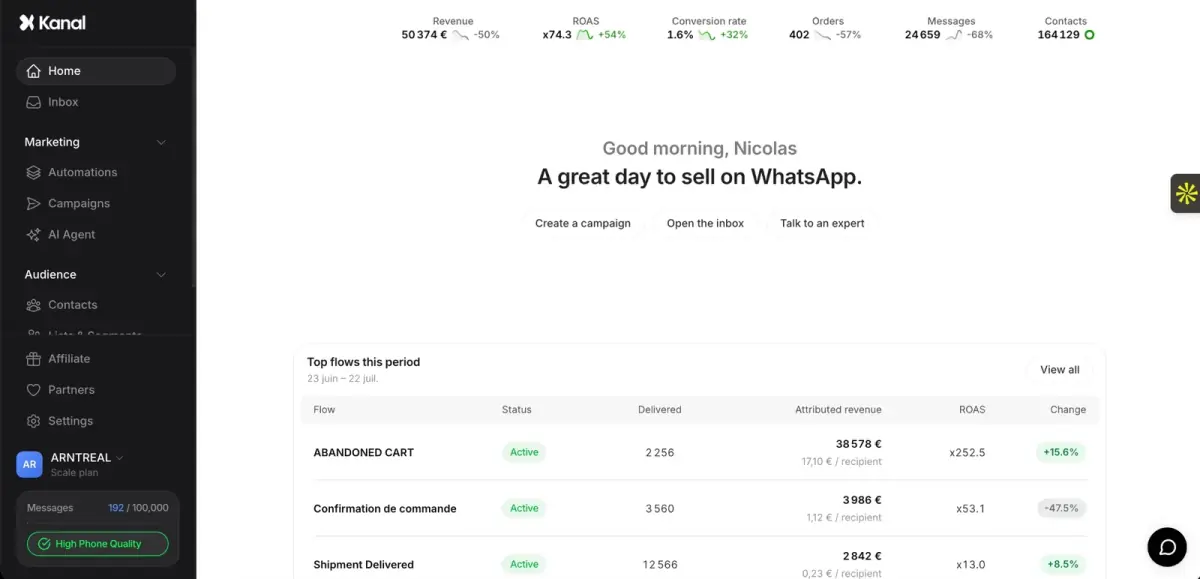 The Kanal app: home dashboard.
Our recommendation for e-commerce
Kanal is a WhatsApp marketing and sales app from the Shopify App Store, rated 5.0 on its listing as of November 4, 2026. Among provider types it sits on the application side: instead of selling raw API access, it ships the tools a store runs on WhatsApp, with automations on Shopify events such as abandoned cart recovery, order notifications, post-purchase offers, review collection on WhatsApp and back in stock alerts, and campaigns to segments.
- Setup: install from the Shopify App Store and connect your WhatsApp Business number.
- Key features: Abandoned cart recovery, WhatsApp campaigns to segments, order notifications, a shared team inbox, an AI agent on the Scale and Business plans, and revenue tracked per message
- Opt-ins: a pop-up and a chat widget that open WhatsApp, so customers opt in from your store
- Channels: WhatsApp, plus RCS and SMS from the Scale plan. Kanal sends no email.
- Pricing: Pro at €89, Scale at €149 and Business at €350 per month on the pricing page. Meta bills WhatsApp messages on top.
Strengths: e-commerce focus, flows built around Shopify store events, revenue tracked per message, no code.
Trade-offs: built for online stores rather than non-commerce use cases; the AI agent, RCS, SMS and the Klaviyo integration start on the Scale plan; PrestaShop is connected with a Kanal expert rather than self-serve; no email channel.
2. Twilio
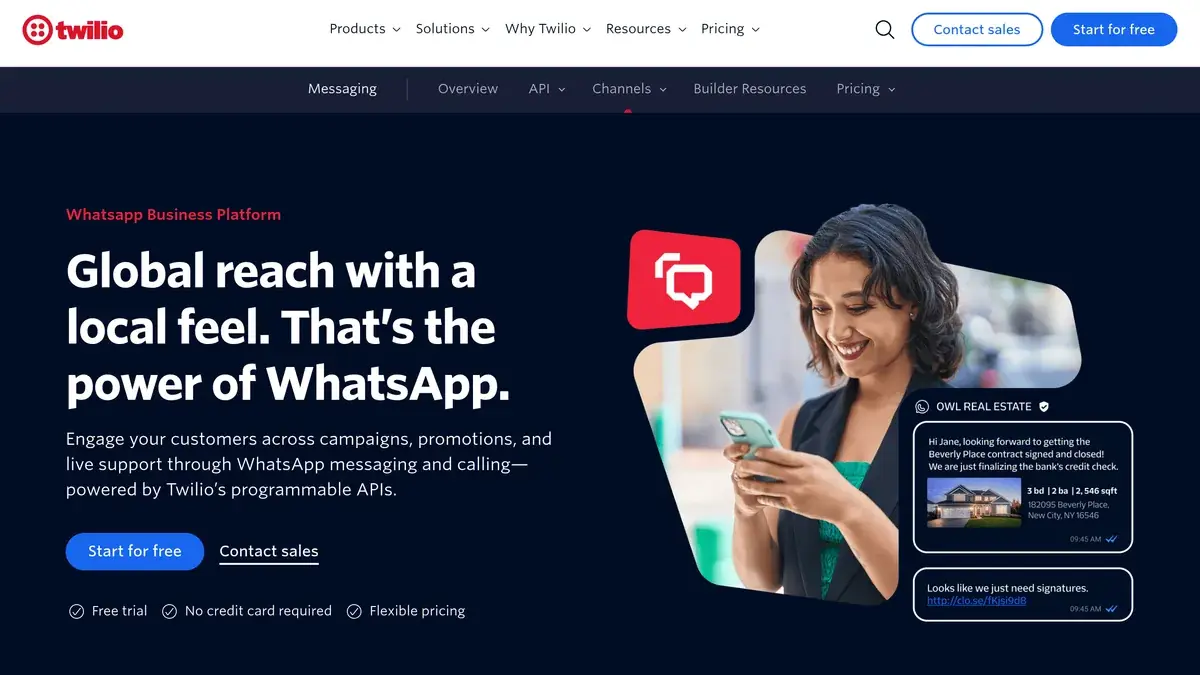
Positioning: programmable messaging APIs
Twilio is a communications platform for developers. WhatsApp runs through its Programmable Messaging API and Conversations API, next to SMS, RCS, voice and email. Your team builds the campaign interface, inbox and flows on top of the APIs, which gives full control over the integration.
- Pricing: $0.005 per message, inbound or outbound, plus Meta's template fees, which Twilio passes through
- Other fees: $0.001 per message that ends in a failed status
- Channels: SMS, WhatsApp, RCS, voice, email
- Shopify and e-commerce: built by your developers via the API
- Getting started: free trial, no credit card required
- Source: Twilio WhatsApp pricing, read November 4, 2026
Strengths: flexible APIs, several channels under one account, usage-based pricing.
Trade-offs: campaigns, inbox and cart flows require development work.
3. Bird (formerly MessageBird)
Positioning: official Meta BSP with a WhatsApp API
Bird (messagebird.com now redirects to bird.com) describes itself as an official Meta Business Solution Provider with a direct relationship with Meta. Its WhatsApp API covers templates, buttons and carousels, media and signed webhooks. Bird's Shopify integration adds abandoned cart solutions, campaigns with product recommendations, and sign-up forms for SMS, WhatsApp and email.
- Pricing: Bird's pricing page says you pay "Bird's processing rate plus any Meta fee". Bird's fee is $0.005 per outbound message in every category, and messages your customers send you are free. You pay as you go, or put down a monthly deposit that becomes spendable balance: Startup $15, Growth $100, Scale $500 (with 10% off Bird's WhatsApp outbound fee).
- Rates shown for the United States: marketing $0.030 per message ($0.005 Bird fee plus $0.025 Meta fee), utility, authentication and service $0.0084 ($0.005 plus $0.0034). WhatsApp does not currently deliver marketing templates to US numbers (see the region section below).
- Source: Bird WhatsApp pricing and Bird's Shopify integration, read November 4, 2026
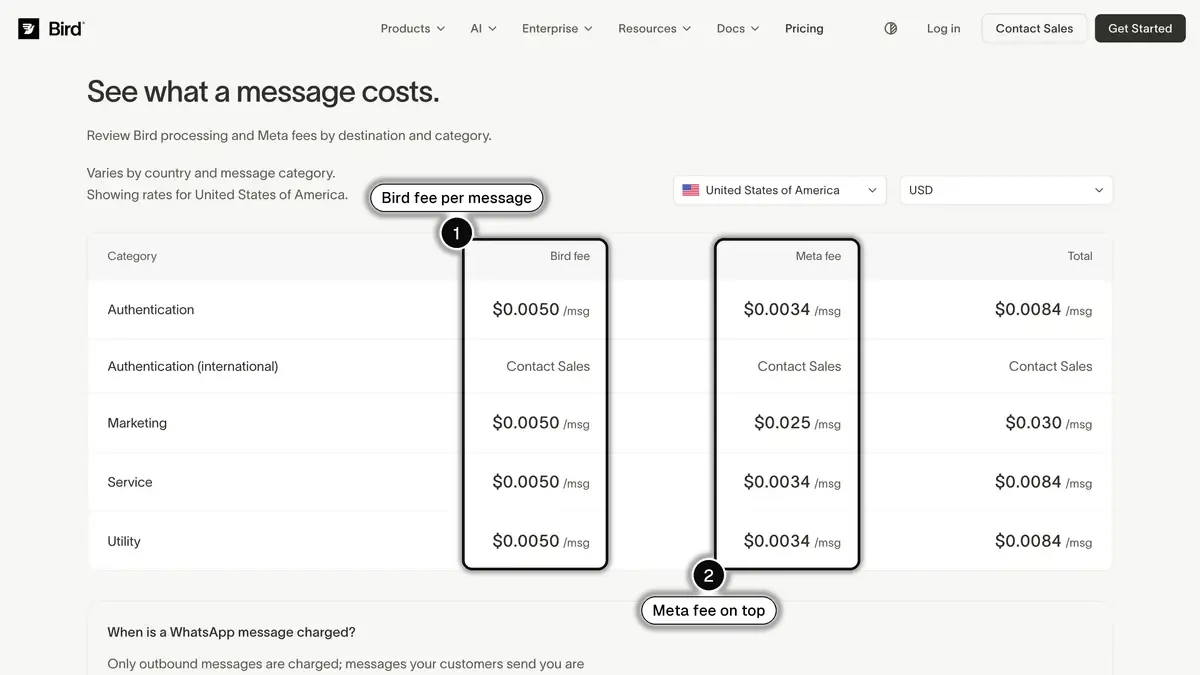 Source: Bird, WhatsApp pricing page (United States), read on October 24, 2026.
- Channels: WhatsApp, SMS, email
- Shopify and e-commerce: Shopify integration with abandoned cart solutions
Strengths: per-message rates published by destination, Shopify integration.
Trade-offs: Meta's share varies by country and category, so check the rate table for each market you sell to.
4. Gupshup
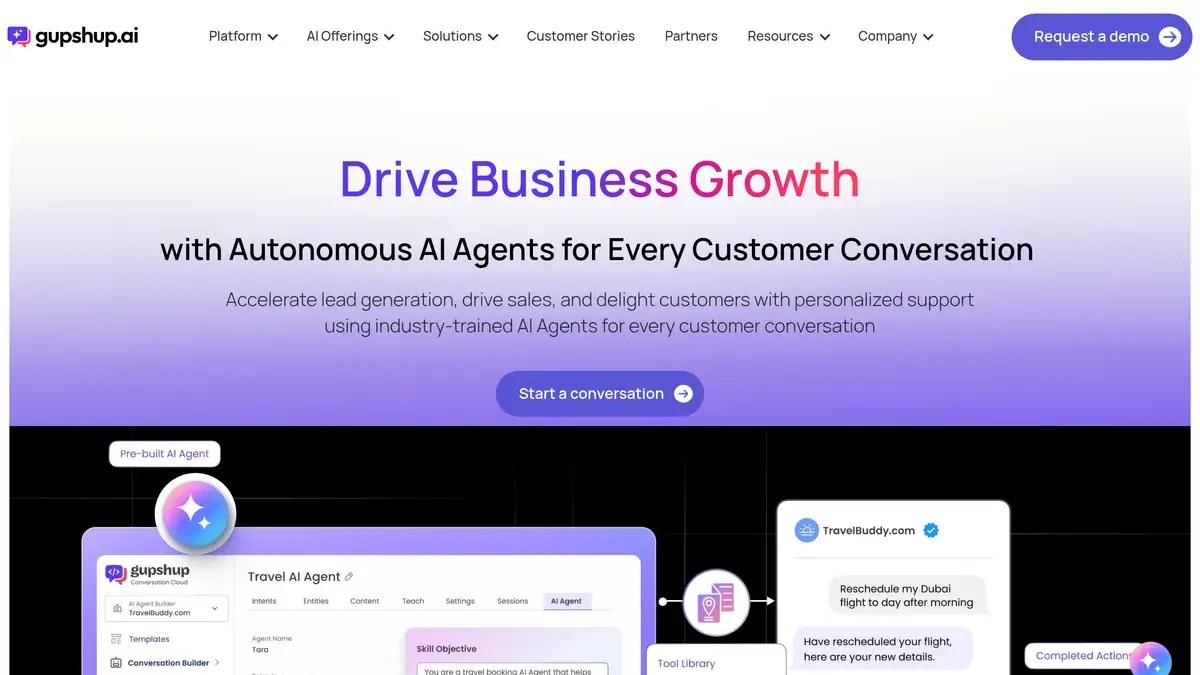
Positioning: conversational AI platform
Gupshup presents itself as a conversational AI platform for marketing, commerce and support automation, with AI agents for sales, marketing and customer support. It covers WhatsApp, Instagram, SMS and RCS.
- Pricing: on its self-serve plan, Gupshup charges $0.001 per message, and WhatsApp's message fees are billed at actuals
- Channels: WhatsApp, Instagram, SMS, RCS
- Shopify and e-commerce: check with vendor
- Source: Gupshup WhatsApp API pricing, read November 4, 2026
- AI: AI agents for sales, marketing and support
Strengths: several messaging channels, AI agents, a published per-message fee on the self-serve plan.
Trade-offs: the published price covers the self-serve plan; other plans are quoted by Gupshup.
5. 360dialog
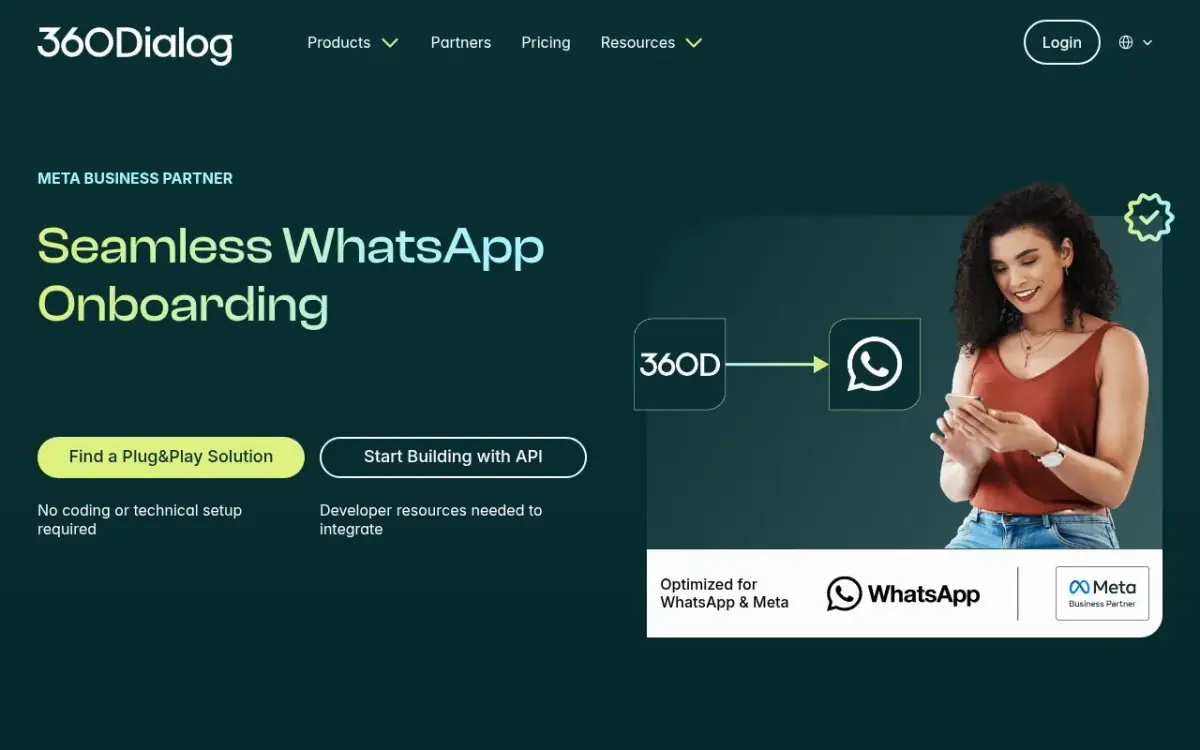
Positioning: WhatsApp API access priced per number
360dialog (360dialog GmbH, Germany) is an official Meta partner that sells WhatsApp API access per number, with full developer control, plus a partner platform for companies that resell WhatsApp to their own clients. Marketing tools come from your own development or from partners matched through its Marketplace plan.
- Pricing: WhatsApp API at €49 per number per month (Regular), €99 (Premium) or €500 (Scale), plus Meta's messaging fees. Marketplace plan at €99 per number per month. Partner Platform from €250 per month plus €49 per regular channel, month to month.
- Meta fees: billed on top of the plan; 360dialog describes its Partner Platform as having zero message markup
- Channels: WhatsApp
- Shopify and e-commerce: via the API or partner tools
- Source: 360dialog pricing, read November 4, 2026
Strengths: transparent per-number pricing, Meta's fees shown separately, developer control.
Trade-offs: the campaign builder, inbox and cart flows come from development or partner tools.
6. Infobip
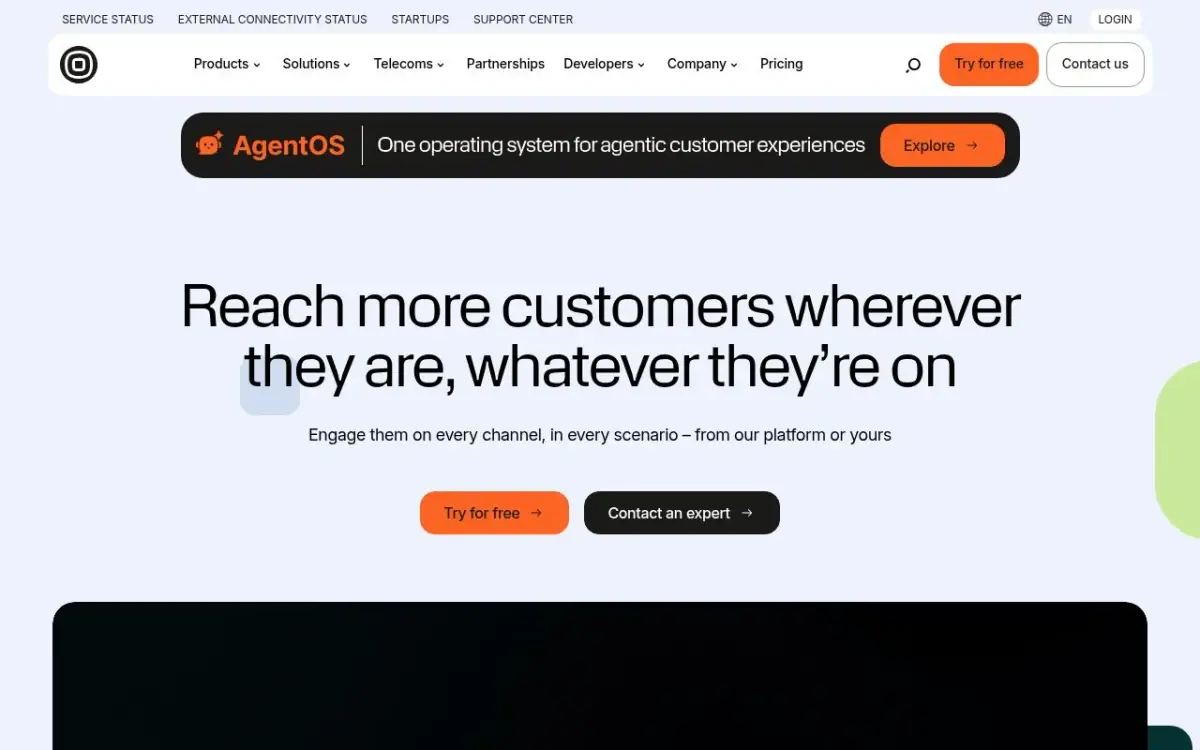
Positioning: omnichannel platform, Premier Meta Partner
Infobip is a Premier Meta Partner and says it was among the first BSPs for WhatsApp. WhatsApp sits next to SMS, RCS, email, voice, Viber, Messenger, Instagram and other channels. Its products include Conversations for customer engagement and Moments for campaigns, with 24/7 support.
- Pricing: WhatsApp is charged per message; the pricing page shows estimated prices, and custom plans are built with sales
- Channels: SMS, RCS, email, voice, WhatsApp, Viber, Messenger, Instagram and more
- Shopify and e-commerce: Shopify integration that syncs customer and event data, for example to remind customers about items left in their carts
- Getting started: try for free or contact sales
- Source: Infobip WhatsApp pricing and Infobip's Shopify documentation, read November 4, 2026
Strengths: wide channel coverage, Shopify data sync, 24/7 support.
Trade-offs: custom plans go through sales.
7. Wati
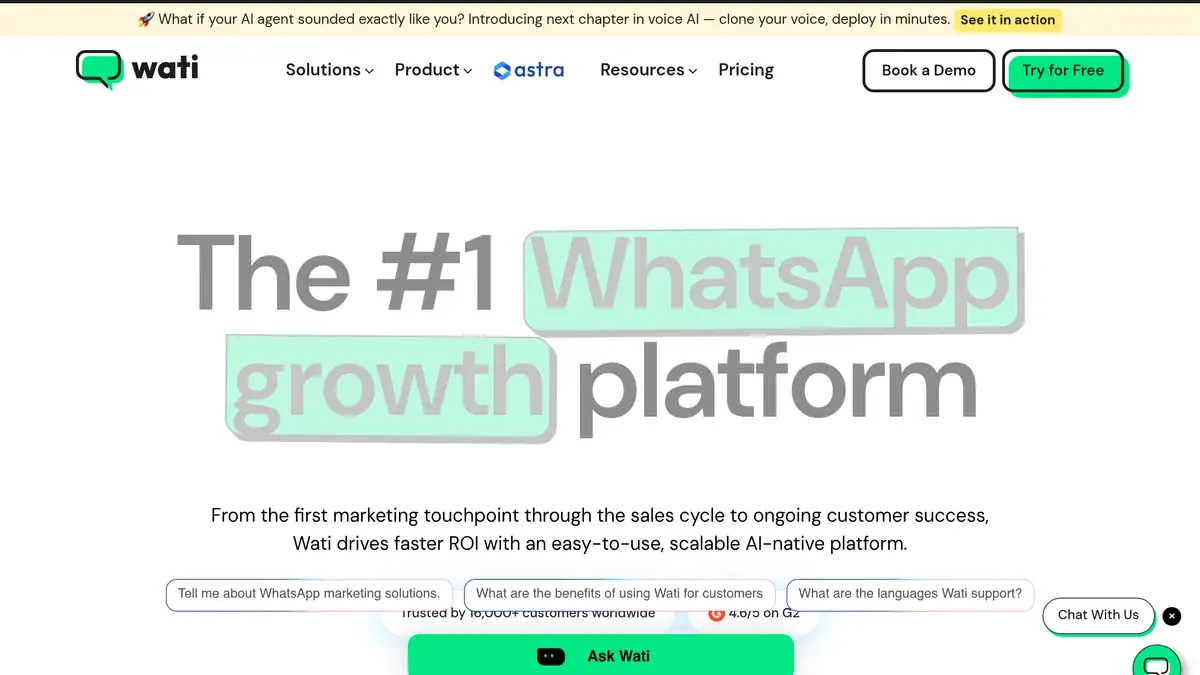 Screenshot of the Wati website.
Positioning: team inbox, chatbots and broadcasts
Wati packages the WhatsApp Business API with a shared team inbox, a chatbot builder, broadcast management and template submission on all plans. It also covers Instagram, Facebook Messenger and TikTok Business Messaging. See our Wati alternative breakdown for a side-by-side with Kanal. For the wider field, see our list of Wati alternatives.
- Pricing: Growth €59/month, Pro €119/month and Business €279/month billed annually, as displayed in euros on November 4, 2026. Message fees are charged per Wati's rate card.
- Shopify and e-commerce: Shopify integration as an add-on at USD 4.99/month
- Integrations: Salesforce, HubSpot, Zapier, Zoho CRM, Shopify, WooCommerce, Make, Klaviyo
- Getting started: 7-day free trial; a dedicated onboarding service (one-time fee) includes BSP migration
- AI: 1 Astra AI agent and 2,000 Wati AI credits a month on Growth, 2 agents and 5,000 credits on Pro, with extra credits sold as an add-on
- Source: Wati pricing, read November 4, 2026
Strengths: low entry price, all-in-one inbox, broad integration list.
Trade-offs: the Shopify integration is a paid add-on and AI usage is capped by credits; message fees follow Wati's own rate card.
8. Charles
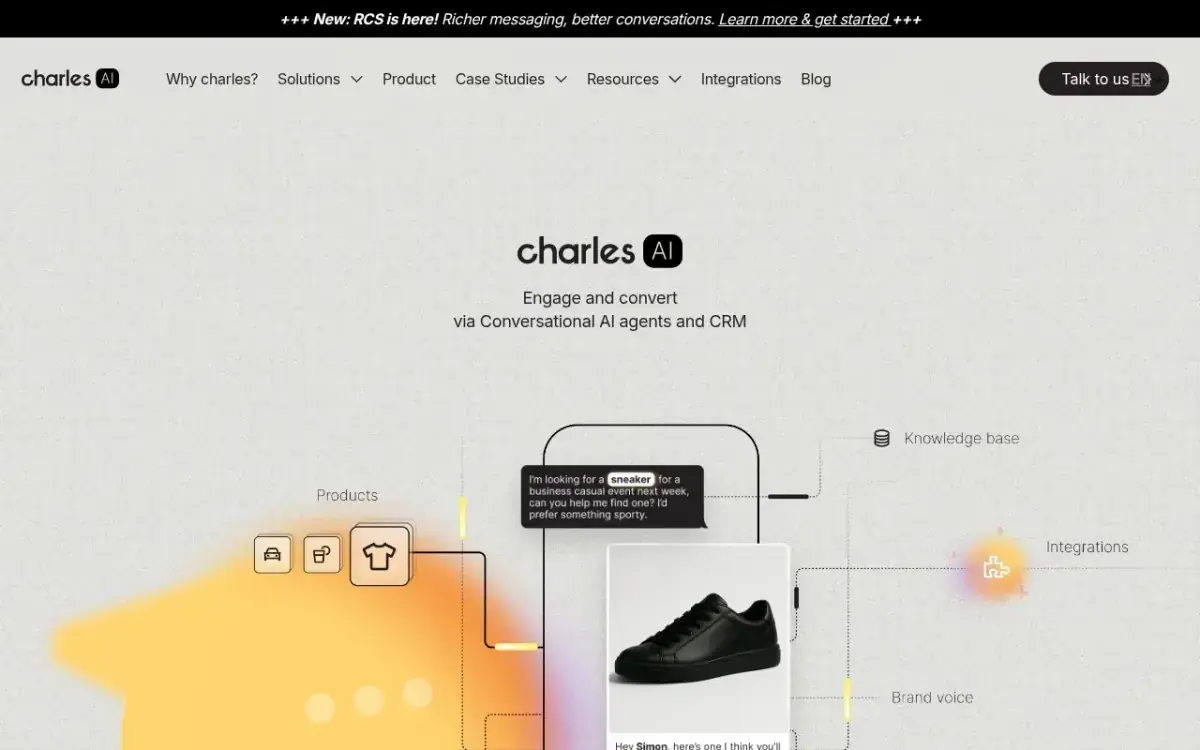 Screenshot of the Charles website.
Positioning: conversational AI and CRM
Charles (Charles GmbH, Berlin) describes itself as a WhatsApp Solution Provider (BSP) combining software and expertise, and as a conversational AI and CRM platform. It covers WhatsApp, Instagram, Messenger, live chat and chat ads, with use cases such as abandoned cart, back in stock, campaigns and win-back, powered by its AI agents. See our Charles comparison for a feature-by-feature head-to-head.
- Pricing: through its sales team
- Channels: WhatsApp, Instagram, Messenger, live chat
- Integrations: Shopify, Salesforce, Emarsys, Klaviyo, Zendesk
- Getting started: sales-led
- Source: Charles integrations, read November 4, 2026
Strengths: e-commerce use cases across the funnel, CRM, several chat channels.
Trade-offs: pricing comes from a conversation with its sales team.
9. AiSensy
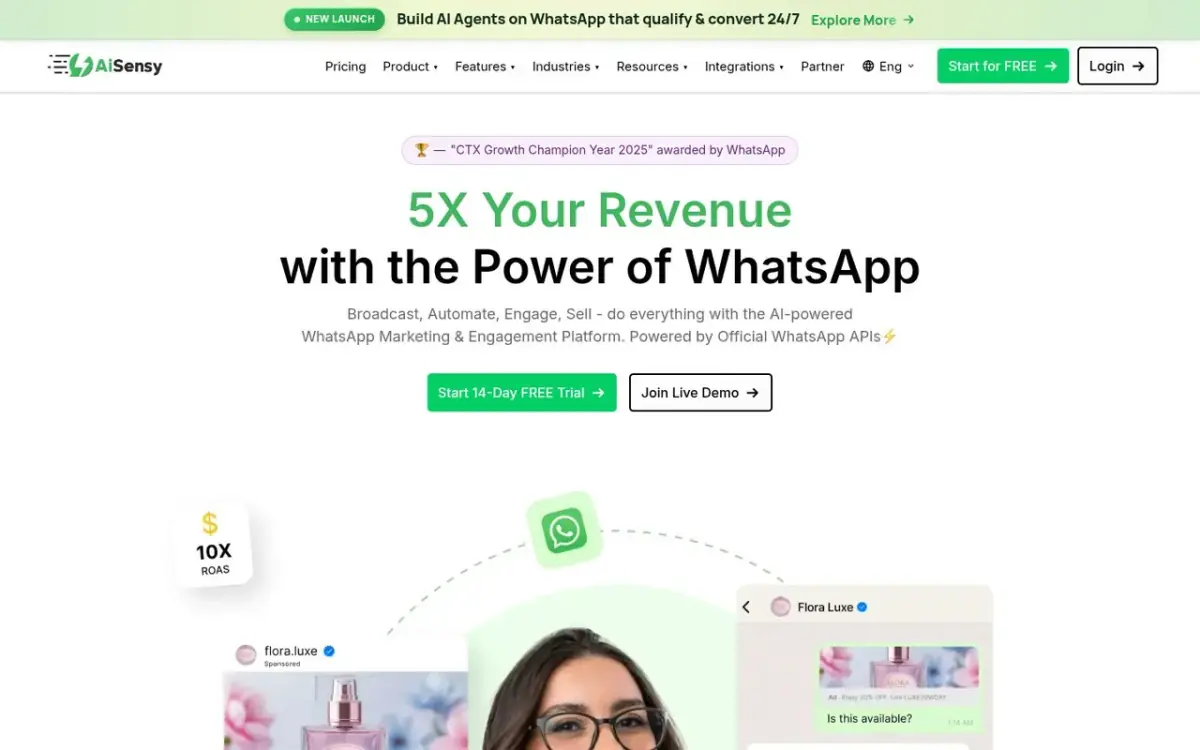 Screenshot of the AiSensy website.
Positioning: WhatsApp API platform priced in rupees
AiSensy gives access to the official WhatsApp Business API on your number, with broadcasting, retargeting, a shared team inbox and a Click-to-WhatsApp Ads Manager. Prices and per-message rates are shown in rupees for users in India.
- Pricing: Free Forever plan, then Basic ₹1,500/month (which adds broadcasting and the store integrations), Pro ₹3,200/month, Premium ₹9,100/month, billed monthly
- Message rates shown (users in India): marketing ₹1.09, utility ₹0.145 and authentication ₹0.145 per message; service ₹0.145 per message after 1,000 free service messages per number each month
- Shopify and e-commerce: Shopify and WooCommerce integrations for order, shipping and abandoned-cart notifications (our Shopify vs WooCommerce guide covers the choice between the two platforms)
- Add-ons: AI agent builder ₹1,350/month (1,000 AI messages), chatbot builder ₹2,500/month (5 chatbots)
- Source: AiSensy pricing, read November 4, 2026
Strengths: low entry price in India, Click-to-WhatsApp ads tooling, store integrations.
Trade-offs: the chatbot builder and AI agent are add-ons; rates vary by recipient country.
10. Yellow.ai
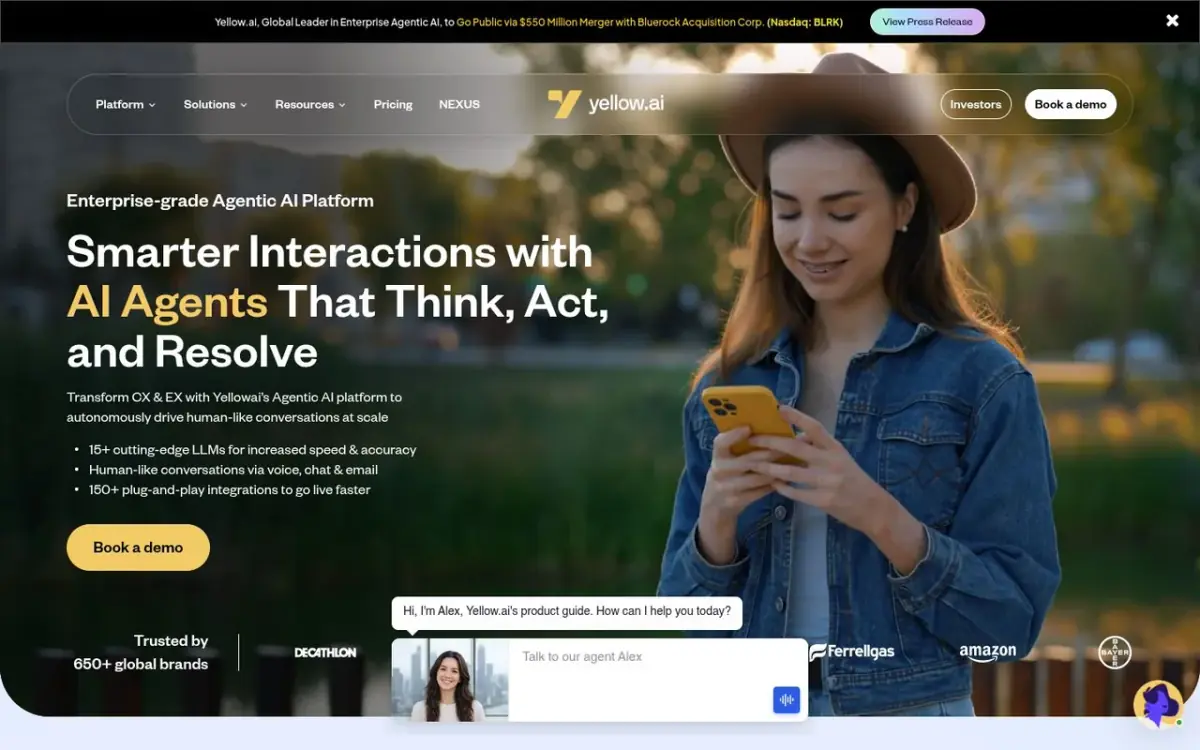 Screenshot of the Yellow.ai website.
Positioning: enterprise agentic AI platform
Yellow.ai calls itself an enterprise-grade agentic AI platform for customer service automation. Its documentation describes it as an official WhatsApp Business Service Provider (BSP). On WhatsApp it runs campaigns, customer support, conversational marketing and commerce.
- Pricing: Free tier (1 AI agent, 500 chat sessions per month, then $0.99 per resolution), Basic, and Enterprise on request
- Channels: chat, voice, email, SMS
- Getting started: free tier, or book a demo
- Source: Yellow.ai pricing, read November 4, 2026
Strengths: AI agents across channels, enterprise options.
Trade-offs: built around customer service automation; enterprise features are on request.
11. Sinch
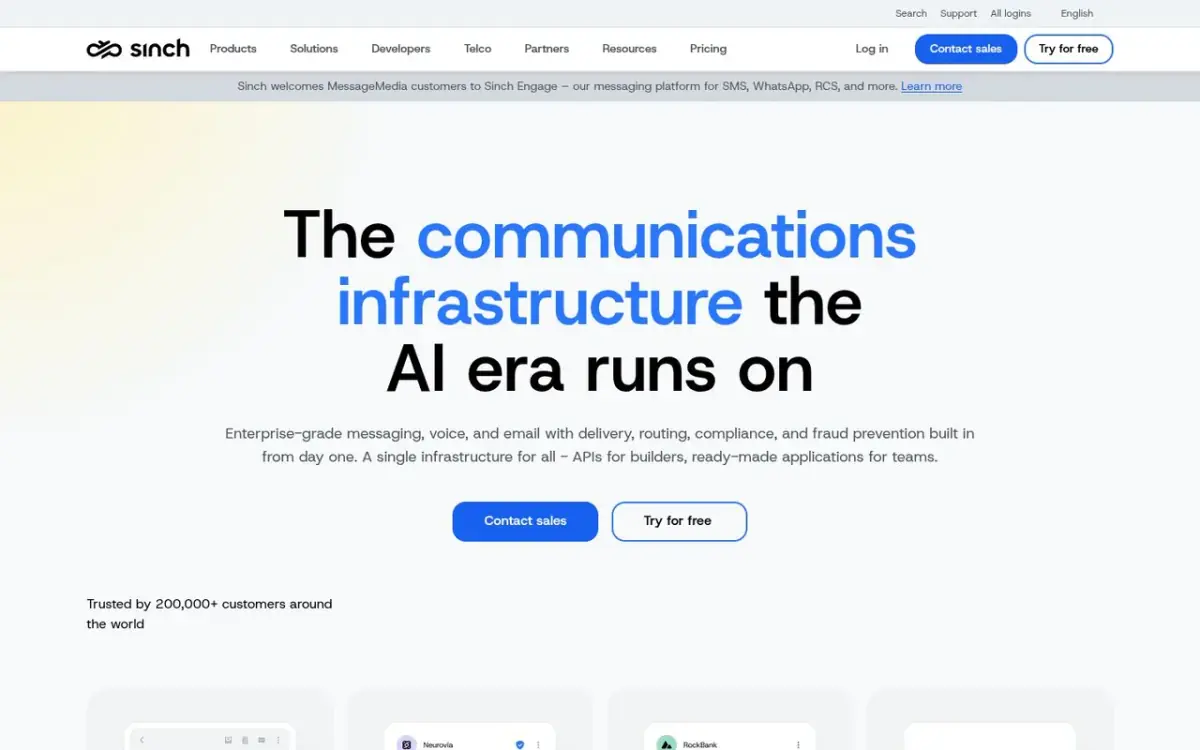 Screenshot of the Sinch website.
Positioning: Conversation API and Sinch Engage
Sinch is a Meta Premier Partner. Developers use its Conversation API, hosted in the US (East), the EU (Ireland) or Brazil, to reach customers over SMS, RCS, WhatsApp, Viber, Messenger, Instagram and other channels. Smaller teams can use Sinch Engage, which adds WhatsApp through a social channels add-on.
- Pricing: Sinch Engage plans are priced by the country where the business is based. On the US version of the page, plans start at $99 per month (Basics), and the social channels add-on for WhatsApp, Messenger and Instagram costs $10 per month, with 1,000 WhatsApp messages included, then $0.05 each. Conversation API: contact sales or try for free.
- Shopify and e-commerce: Sinch Engage lists a Shopify integration for SMS, RCS and WhatsApp
- Channels: SMS, RCS, MMS, WhatsApp, Viber, Messenger, Instagram and more
- Hosting: Conversation API in the US, the EU or Brazil
- Getting started: 14-day free trial of Sinch Engage, no credit card required
- Source: Sinch Engage pricing and its Shopify integration, read November 4, 2026
Strengths: choice of hosting region, many channels, entry plans for small teams.
Trade-offs: Sinch Engage plans are sized on SMS volumes, with WhatsApp as an add-on.
12. Trengo
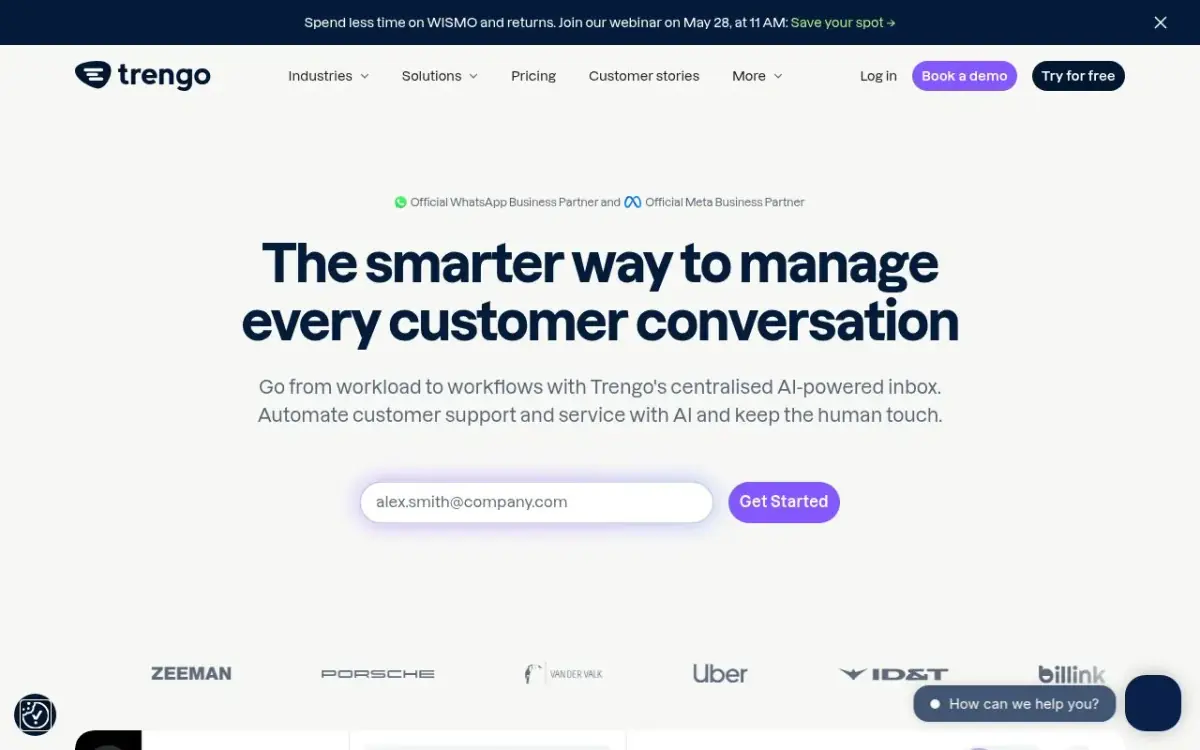 Screenshot of the Trengo website.
Positioning: omnichannel inbox, WhatsApp Official Partner
Trengo is a WhatsApp Official Partner that bundles WhatsApp into an omnichannel inbox with automation and AI agents. See our Trengo alternative analysis for a feature-by-feature comparison, and our list of Trengo alternatives.
- Pricing: Boost from €299/month billed annually (€349 monthly, 10 users), Pro from €499/month billed annually (€599 monthly, 20 users), Enterprise custom
- Conversations included: 6,000 a year on Boost and 18,000 on Pro with annual billing (500 and 1,500 a month on monthly billing), a conversation being any reply within a 7-day window; extra conversations €18 per 100 on monthly billing or €15 on annual billing
- WhatsApp fees: Trengo's pricing page says the first 1,000 WhatsApp service messages per phone number are free each month, then Meta charges per message; other WhatsApp, voice and SMS usage is charged per usage, and conversations with an AI surcharge cost €0.30 each on monthly billing or €0.25 on annual billing
- Integrations: Shopify, WooCommerce, Magento 2, PrestaShop, HubSpot, Pipedrive, Salesforce
- Hosting: application hosted on AWS (region not stated on its security page)
- Getting started: book a demo or start a free trial
- Source: Trengo pricing, read November 4, 2026
Strengths: one inbox for the whole team, broad integration list.
Trade-offs: plans include a conversation allowance, and extra conversations are billed in packs.
13. Respond.io
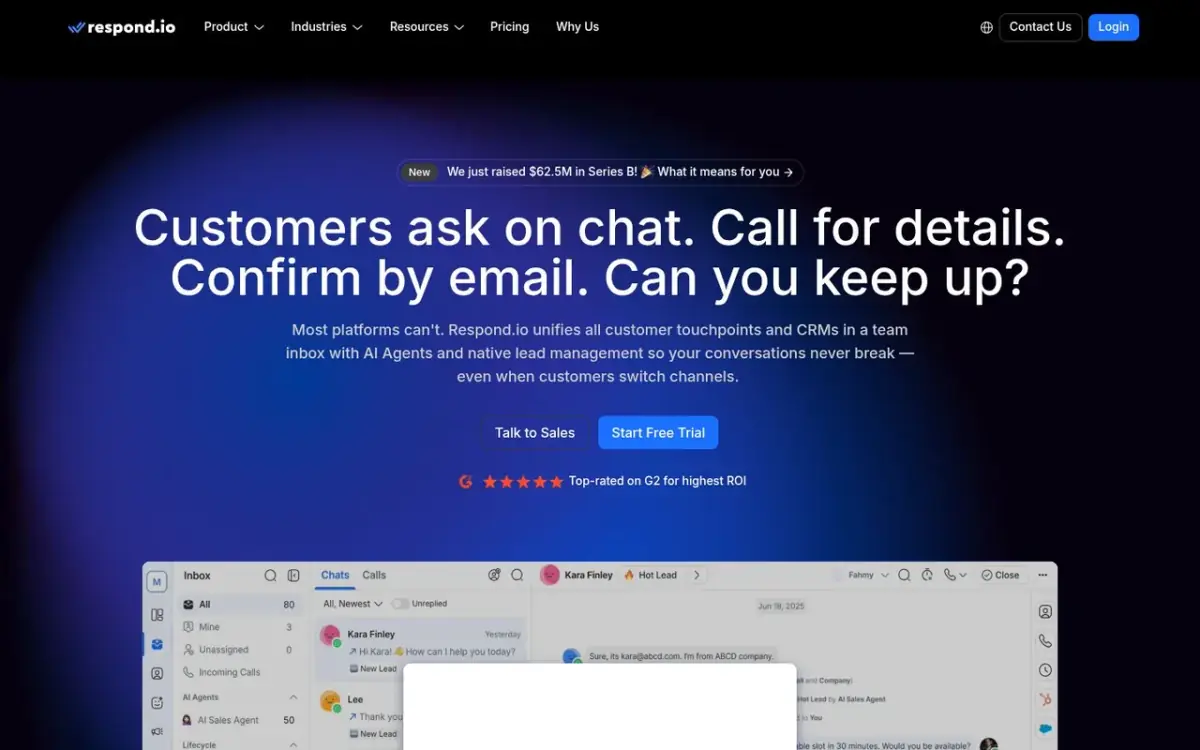 Screenshot of the Respond.io website.
Positioning: customer conversation platform with AI agents
Respond.io (headquartered in Kuala Lumpur, Malaysia) is a WhatsApp Business Solution Provider and Meta Premier Partner, per its WhatsApp Business Platform page. It brings customer conversations from WhatsApp, Messenger, Instagram, TikTok, Telegram, LINE, Viber, WeChat, SMS, email and web chat into a team inbox, with AI agents, lead management and workflow automation, and adds voice calls through the WhatsApp Business Calling API. It says it is built for mid-market B2C businesses running high-volume WhatsApp conversations.
- Pricing: Starter $79/month, Growth $159/month and Advanced $279/month billed yearly ($99, $199 and $349 billed monthly), Enterprise on request. Growth and Advanced start with 1,000 monthly active contacts, meaning the contacts you talk to in the month. Plans include 5,000 AI credits on Starter and start with 10,000 or 20,000 on Growth and Advanced, and extra users cost $12, $20 or $24 per month.
- WhatsApp fees: not included in any subscription; Respond.io's pricing page says Meta charges them based on your usage
- Features by plan: Starter covers team and custom inboxes, the mobile app, AI Assist and basic reports; Growth adds broadcasts, workflow automation, AI agents, advanced reports, Zapier and Make integrations and the developer API
- Shopify and e-commerce: a chat widget for your Shopify store; syncing orders and contact data goes through Make, n8n or Zapier
- Support: 24/7 human and AI support
- Getting started: 7-day free trial, no credit card needed
- Source: Respond.io pricing and its Shopify integration page, read November 4, 2026
Strengths: one inbox across many channels, AI agents and workflows from the Growth plan, AI credits included in every plan.
Trade-offs: broadcasts start on the Growth plan; store data reaches the inbox through Make, n8n or Zapier rather than a native Shopify sync; plans are sized on monthly active contacts.
14. WANotifier
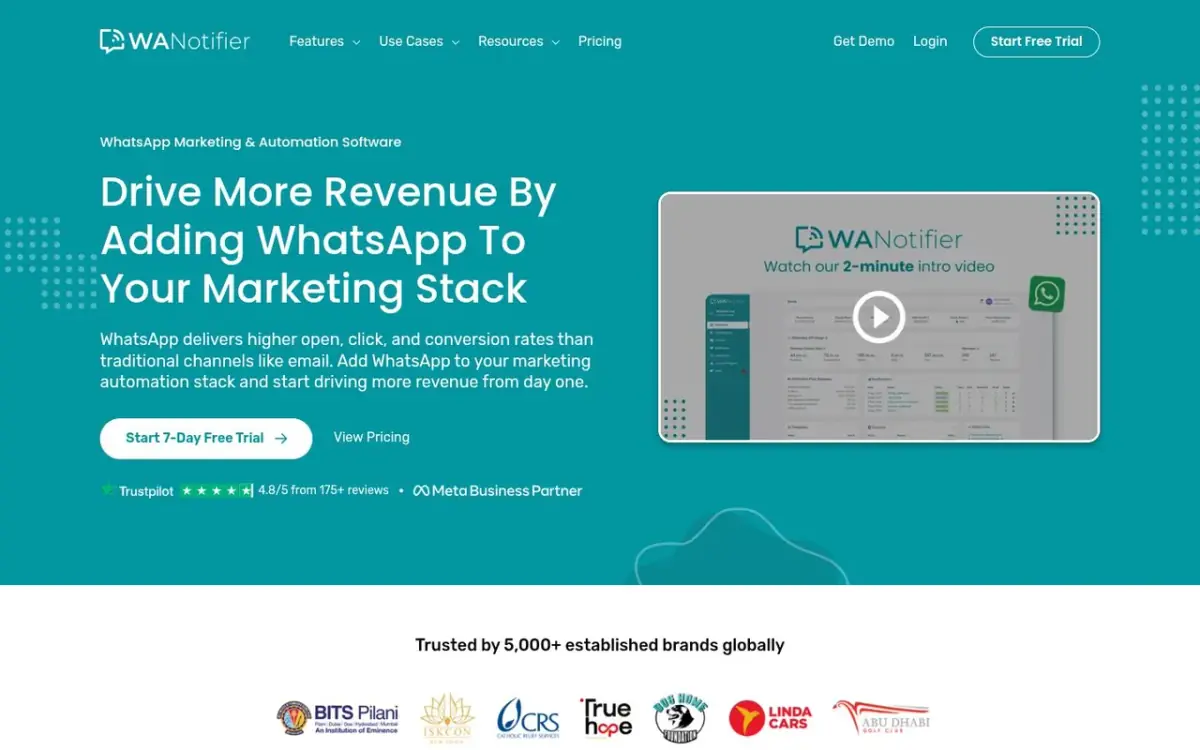 Screenshot of the WANotifier website.
Positioning: WhatsApp marketing and automation software
WANotifier describes itself as WhatsApp marketing and automation software and as an official Meta Tech Partner, built on the WhatsApp Business API with 0% markup on Meta's messaging charges. It captures contacts from Click-to-WhatsApp ads, website forms and WhatsApp Flows, organizes them in a built-in CRM with lists, tags and segments, and runs automations, chatbots, drip sequences, transactional notifications and campaigns, with analytics and a shared team inbox that has Android and iOS apps. WhatsApp Coexistence lets you keep using a number that already runs in the WhatsApp Business app.
- Pricing: Essentials $69/month, Advanced $119/month and Premium $199/month billed monthly for under 1,000 contacts, with yearly billing 20% lower. Plans are priced by contact tier up to 100,000 contacts, with enterprise plans above that on request. Its pricing FAQ says the free plan stopped being offered to new users on October 27, 2025.
- WhatsApp fees: Meta's per-message charges are billed by Meta on top, with 0% markup per WANotifier
- Channels: WhatsApp
- Shopify and e-commerce: WooCommerce and WordPress integrations, plus Zapier, Make, Pabbly, n8n and Integrately connectors, a REST API and webhooks
- Support: standard chat and email support; priority chat, email and call support on Premium
- Getting started: 7-day free trial
- Source: WANotifier pricing, read November 4, 2026
Strengths: 0% markup on Meta's rates, WhatsApp Coexistence, WooCommerce and WordPress integrations, plans priced by contact tier.
Trade-offs: WhatsApp only; store platforms other than WooCommerce and WordPress go through a connector or the API; agent seats, chatbots and drip sequences are capped by plan.
Feature comparison at a glance
| Feature | Kanal | Twilio | Bird | Gupshup | 360dialog | Infobip | Wati | Charles |
|---|---|---|---|---|---|---|---|---|
| Abandoned cart recovery | Built in | Build via API | Via Shopify integration | Check with vendor | Build via API | Cart reminders from Shopify data | Check with vendor | Listed use case |
| AI chatbot | AI agent on Scale and Business | Build via API | Check with vendor | AI agents | Check with vendor | AI chatbot builder, AI agents | Chatbot builder, Astra AI agents with AI credits | AI agents |
| Shopify integration | Shopify app | Build via API | Integration | Check with vendor | Via API or partner tools | Integration (data sync) | Add-on, USD 4.99/month | Integration |
| Broadcast campaigns | Campaigns to segments | Build via API | Via Shopify integration | Check with vendor | Via API or partner tools | Moments | Broadcasts | Listed use case |
| Channels | WhatsApp, plus RCS and SMS from Scale | SMS, WhatsApp, RCS, voice, email | WhatsApp, SMS, email | WhatsApp, Instagram, SMS, RCS | SMS, RCS, email, voice, WhatsApp and more | WhatsApp, Instagram, Messenger, TikTok | WhatsApp, Instagram, Messenger, live chat | |
| Starting price | €89/month | $0.005/message + Meta fees | $0.005/outbound message + Meta fees | $0.001/message + WhatsApp fees | €49/number/month + Meta fees | Custom or per message | €59/month billed annually | On request |
"Check with vendor" means the point is not stated on the pages we reviewed. Prices were read on November 4, 2026, on the pages linked in each provider section.
Which providers suit high-volume sending, webhooks and rate limits?
How many messages you can send is decided by Meta, not by the provider: Meta's messaging limits apply to your business portfolio whichever platform you use. What changes from one provider to the next is how you plug into it and what volume costs.
| What to compare | What the providers publish |
|---|---|
| API and webhooks | Twilio, Sinch, 360dialog and Infobip sell API access for teams that build their own stack. Bird's WhatsApp API includes signed webhooks. WANotifier lists a REST API and webhooks. |
| Cost per message at volume | Twilio and Bird add $0.005 per message and Gupshup $0.001 per message, on top of WhatsApp's fees (November 4, 2026). WANotifier states a 0% markup on Meta's rates, and 360dialog bills Meta's fees on top of its per-number plan. |
| Fixed cost | 360dialog bills per number (from €49 per month). Wati, Trengo, Respond.io and WANotifier bill a monthly plan sized on users, conversations or contacts. |
| Stated positioning | Respond.io says it is built for mid-market B2C businesses running high-volume WhatsApp conversations. |
| Reliability | Ask each vendor for its status page history and its service level agreement in writing. None of the pricing pages we read states an uptime figure. 360dialog publishes support response targets per plan. |
For a sales or support team that works high volumes from an inbox, the plan structure matters more than the API: check how many users are included and what an extra user or conversation costs (Trengo and Wati publish both). For an online store, volume mostly comes from campaigns and order events, which a Shopify app such as Kanal sends from store events.
Which platforms help with templates, approvals and compliance?
Every template is reviewed by Meta, whichever provider submits it, and Meta decides its category. So no provider approves templates faster on its own authority. Providers differ on the tooling around submission:
- Template submission from the product: Wati includes template submission on all plans. Bird's WhatsApp API covers templates, buttons and carousels.
- Template versions at scale: none of the pages we read documents version control for templates. If you manage many templates across markets, ask the vendor how versions, languages and categories are tracked, and whether templates can be exported if you migrate.
- Opt-in and consent: Meta requires opt-in before you message people (our opt-in guide covers the GDPR side). Kanal collects opt-ins with a pop-up and a chat widget that open WhatsApp.
- Data location: Sinch's Conversation API offers hosting in the US, the EU (Ireland) or Brazil. 360dialog is a German company, Charles is registered in Berlin, and Trengo hosts its application on AWS. For the others, ask for the hosting region and the data processing agreement in writing.
Our WhatsApp Business API guide explains template categories and Meta's review in more detail.
Which WhatsApp API providers have CRM integrations?
| Provider | CRM and helpdesk integrations it lists |
|---|---|
| Kanal | Shopify app with segments, automations on store events and a shared team inbox; integrations with Klaviyo, Gorgias, Zendesk, Crisp, Recharge, Loyoly, Splio and PrestaShop |
| Wati | Salesforce, HubSpot, Zoho CRM, Klaviyo |
| Trengo | HubSpot, Pipedrive, Salesforce |
| Charles | Salesforce, Emarsys, Klaviyo, Zendesk |
| Respond.io | HubSpot, Salesforce and Pipedrive on its integrations page |
| WANotifier | Built-in CRM with lists, tags and segments, plus Zapier, Make and n8n connectors |
API-first providers (Twilio, Sinch, 360dialog) leave the CRM connection to your developers.
Which provider for the US, Germany, APAC, LATAM or MENA?
Meta's fee for a message depends on the country calling code of the person who receives it, so the provider you pick does not change it. Our WhatsApp Business pricing guide lists Meta's rates for the US, Germany, France, Spain, the UK, India, Brazil and Mexico. Region then matters for three things: billing currency, where data is hosted, and where the vendor's team sits.
| Region | What the providers publish |
|---|---|
| United States | Twilio, Bird, Gupshup, Respond.io and WANotifier publish prices in US dollars. Sinch can host its Conversation API in the US (East). Whichever provider you use, WhatsApp does not currently deliver marketing template messages to US phone numbers, per Meta's per-user marketing limits page (read on October 24, 2026, see our WhatsApp marketing USA guide): utility templates and replies inside the 24-hour window still deliver. |
| Germany and the EU | 360dialog (Germany), Trengo and Wati display prices in euros. Charles is registered in Berlin. Sinch can host its Conversation API in the EU (Ireland). |
| APAC | Respond.io is headquartered in Kuala Lumpur. AiSensy prices its plans and message rates in rupees for users in India. |
| LATAM | Sinch can host its Conversation API in Brazil. |
| MENA | None of the 14 pricing pages we read is specific to the region: compare Meta's rates for your recipients' countries, then the provider's own fee. |
Twilio and 360dialog alternatives: which providers to compare
Twilio is a programmable communications platform: WhatsApp runs through its APIs next to SMS, RCS, voice and email, at $0.005 per message plus Meta's fees on Twilio's pricing page (November 4, 2026), and your developers build the flows. 360dialog sells WhatsApp API access per number. The alternative depends on what you want instead:
- Another API: Sinch (Conversation API), Bird, Gupshup and Infobip, or 360dialog if you want a per-number fee instead of Twilio's per-message fee.
- A ready-made product instead of an API: for a Shopify store, including a small one, Kanal ships cart recovery, campaigns and order notifications without development. For a shared inbox, Wati, Trengo and Respond.io.
- A partner program for agencies: 360dialog's Partner Platform (from €250 per month plus €49 per regular channel, as of November 4, 2026).
How do you switch WhatsApp API providers without losing your number?
If your current provider is holding you back (unclear pricing, missing features, reliability), you can change provider and keep your number. Meta changed how this works in 2026. Its account model page (updated September 22, 2026, read on October 24, 2026) splits the old WhatsApp Business Account in two: a WhatsApp account that holds your phone number, business profile and catalogs, and that you own, and a Messaging account that holds templates, billing and webhooks, one per provider. The new model became generally available on September 23, 2026 and reaches all businesses by mid-October 2026, according to Meta.
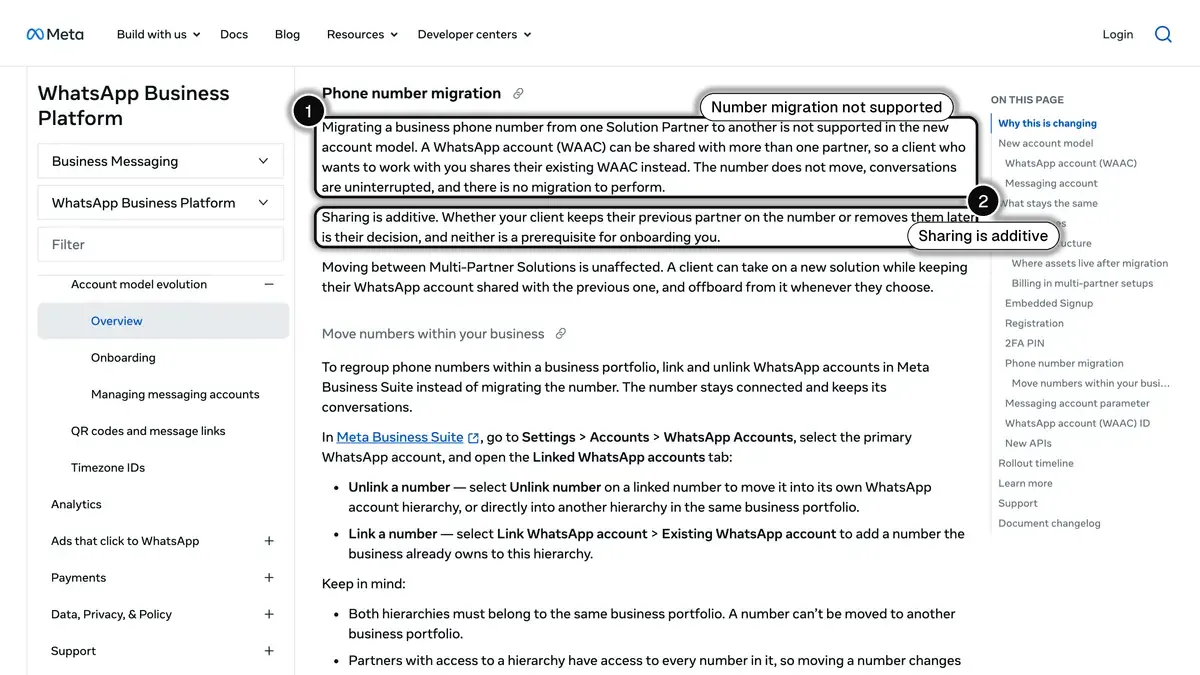 Source: Meta for Developers, Updates to WhatsApp Business accounts, read on October 24, 2026.
What changes when you switch
- You share your WhatsApp account with the new provider, which gets its own Messaging account. Meta says the number does not move and conversations are uninterrupted.
- Moving a number from one provider to another is not supported in the new model, so there is no phone number migration step.
- To stop working with the old provider, you unshare its Messaging account, then the WhatsApp account, in Meta Business Suite.
What stays the same
- Display names, quality ratings and messaging limits, which Meta lists as unchanged.
- Messaging limits remain set at the business portfolio level. While two providers share a number, they share its messaging limit and its throughput.
What you redo
- Templates: they belong to the Messaging account, so you recreate them in the new provider's account. Meta's template migration API copies approved templates only between Messaging accounts owned by the same business.
- Billing: each Messaging account has its own payment method.
- Webhooks, contacts and automations: set them up in the new tool so incoming messages and store events keep flowing.
Provider notes
- Wati: its dedicated onboarding service (one-time fee) includes BSP migration.
- 360dialog: its Scale plan lists dedicated migration support.
- API-first setups (Twilio, 360dialog, Sinch Conversation API): plan developer time to reconnect webhooks and custom code to the new provider.
Common pitfalls when you switch
- Scheduling campaigns before templates are approved in the new account: they cannot be sent until then.
- Forgetting webhook URLs: incoming messages never reach your new tool.
- Creating a new business portfolio instead of sharing your existing account: new portfolios start with a messaging limit of 250, shared by all numbers in the portfolio, per Meta's messaging limits. Our quality rating guide explains how to protect your sending capacity.
- Customer expectations: nothing changes for your customers, who keep writing to the same number.
How to choose a WhatsApp Business API provider
Choose Kanal if you run a Shopify store and want WhatsApp to drive revenue without developers. You get abandoned cart recovery, campaigns to segments, order notifications and, on the Scale and Business plans, an AI agent.
Look at Twilio or Sinch if your development team wants to build its own messaging stack on an API.
Look at 360dialog if you are a developer or an agency that wants API access priced per number.
Look at Infobip or Bird if you need WhatsApp next to other channels such as SMS and email.
Look at Wati or Trengo if your priority is a shared inbox for a service team.
Look at Charles if you want a conversational AI and CRM platform with sales-led onboarding.
Getting started
Ready to choose a provider? Here's what to do next:
- Define your use case: marketing, support or transactional messages?
- Estimate your volume: Meta charges per delivered template message, so your template volume drives costs. Read our pricing guide for a unit-economics model.
- Check integrations: make sure the provider connects with your store and existing tools.
- Validate data protection: ask for the data processing agreement and the hosting region in writing.
- Test before you commit: Twilio, Wati, Infobip, Sinch Engage, Trengo, Respond.io and WANotifier advertise trials.
For e-commerce brands on Shopify, we recommend starting with Kanal, a WhatsApp marketing and sales app installed from the Shopify App Store: Pro costs €89 a month, Scale €149 and Business €350 on Kanal's pricing page, and Meta bills WhatsApp messages on top.
How much do WhatsApp Business API providers cost?
Whichever provider you choose, you pay two layers: Meta's per-message fees and the provider's own price. Our pricing guide gives Meta's rates per message by country and category.
Providers that display prices in euros, as of November 4, 2026:
| Provider | Published price in EUR | Meta fees |
|---|---|---|
| 360dialog | €49 (Regular), €99 (Premium) or €500 (Scale) per number per month | Billed on top of the plan |
| Kanal | Pro €89, Scale €149, Business €350 per month | Billed by Meta on top |
| Wati | Growth €59, Pro €119, Business €279 per month billed annually | Per Wati's rate card |
| Trengo | Boost €299, Pro €499 per month, billed annually | 1,000 free service messages per number each month, then Meta's charge |
Meta also publishes its own rate cards in several currencies. For France, its rate calculator showed a marketing message at €0.0712 and a utility message at €0.0248 on the euro rate card, or $0.0859 and $0.0300 on the dollar one, read on October 23, 2026 (rate card effective October 1, 2026), as listed in our WhatsApp Business pricing guide.
Here is what Meta's official pricing documentation (updated September 30, 2026, read on October 24, 2026) says:
- Per-message pricing since July 1, 2025. Conversation-based pricing is deprecated.
- You pay when a template is delivered. The rate depends on the template category (marketing, utility, authentication) and the recipient's country calling code.
- Messages in the customer service window. Non-template messages (service messages), which can only be sent in an open 24-hour customer service window, were not charged until September 30, 2026, and neither were utility templates delivered in an open window. Since October 1, 2026, Meta charges both: service messages cost the utility rate of each market after 1,000 free per business phone number each month (Meta's page on the change).
- Free entry points. When a customer messages you from a Click to WhatsApp ad and you reply inside the 24-hour customer service window, a free entry point window opens and your messages are not charged while it is open, which may be for up to 7 days according to the same page (Meta Business Agent messages excluded). See our Click to WhatsApp ads guide.
- Volume tiers. Utility and authentication rates drop with volume. Messages are counted across your business portfolio, per market and category, and the count resets every month.
- Rate cards. Meta publishes rate cards effective October 1, 2026, in several currencies including USD, EUR, GBP and INR, and adjusts rates for specific markets over time.
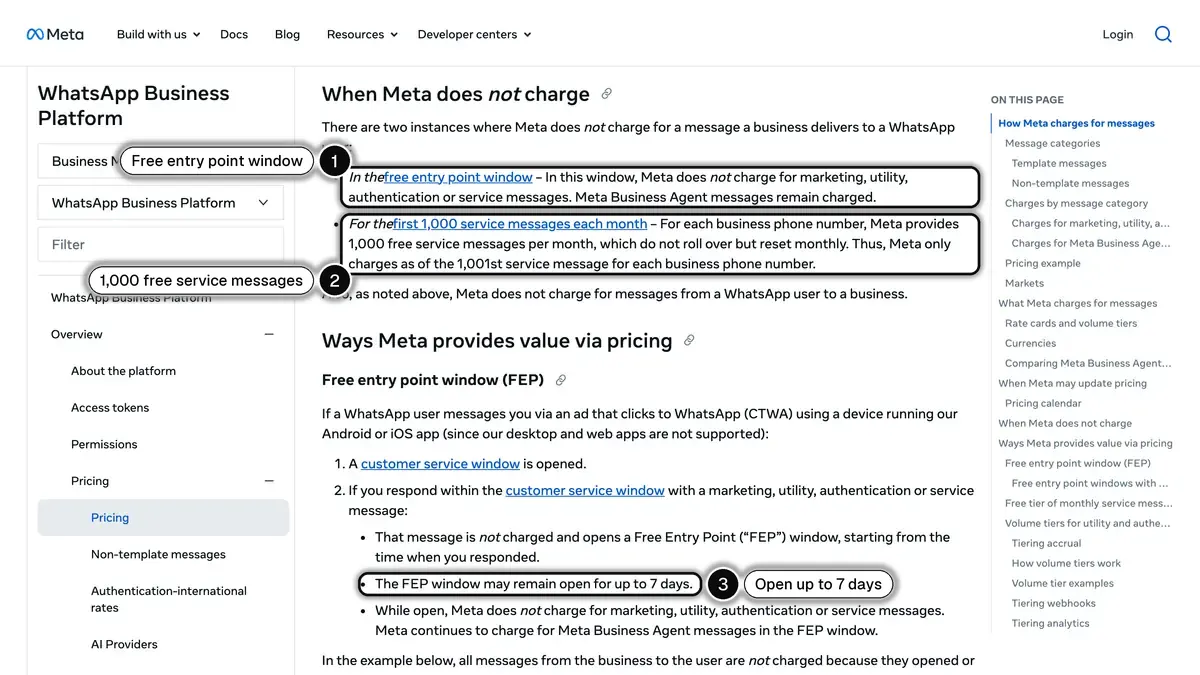 Source: Meta for Developers, WhatsApp Business Platform pricing, read on October 24, 2026.
See Kanal on your own store
- Your campaigns and cart reminders on WhatsApp, starting from your own store
- Post-purchase offers, back-in-stock alerts, then the AI agent that advises your customers
- You leave with the plan that fits and its price
From €89/month
- brands
- 500+
- to set up
- 5 min
- open rate on WhatsApp
- +90%
Nicolas helps e-commerce brands grow revenue with WhatsApp marketing. With deep expertise in Shopify ecosystems and conversational commerce, he shares proven strategies for abandoned cart recovery, broadcast campaigns, and AI-powered customer engagement.